Personalize your kitchen
What belongs on your plate?
Loading your private kitchen...
See what you really ate, not what you remember.
Build the day you actually lived. Adjust each plate, visible oil, added sugar and drink, then keep a meal photo beside the estimate. Use that clearer baseline to plan what comes next, with or without an On2Cook device.
01 / Your day
Build a closer estimate, one eating moment at a time
Start with a familiar Indian meal pattern, then make it yours. Every change updates the day total; every range stays visible because a mixed dish cannot be measured perfectly from memory or a photo.
A standard bowl of cooked poha; visible oil and chai are adjusted separately.
Four plain tea biscuits with milk chai; added sugar is separated from the drink base.
A composed home-style lunch plate; pickle, papad and dessert are not included.
One medium samosa; absorbed frying fat is already inside the food estimate.
A small packaged chips serving; select cola or another drink separately.
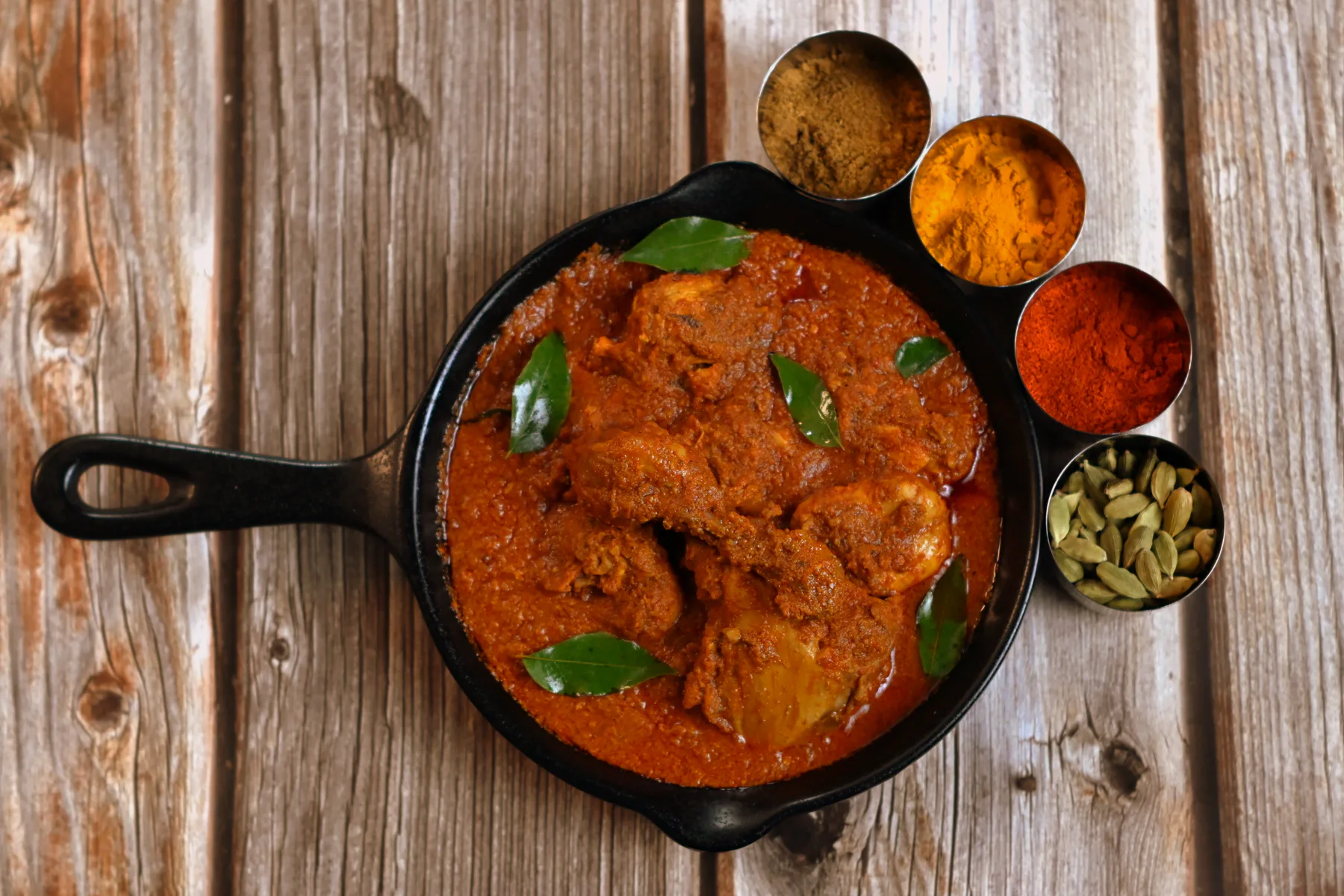
One serving of chicken curry with rice; gravy oil is adjusted separately.
Transparent calculationFood estimate × portion + 45 kcal per teaspoon of added oil + 16 kcal per teaspoon of added sugar + the selected drink.
Honest uncertaintyMixed meals retain a 10-25% band. Photos improve recall and review, but cannot reveal hidden oil, sugar or recipe composition by themselves.
Starting point, not a normThe opening entries form an illustrative urban Indian day, not a recommended menu, population average or personal prescription.
Plain water is excluded. Representative dish defaults are a prototype ingredient model pending approved recipe-level nutrition records. ICMR-NIN provides Indian dietary context; WHO identifies free sugar, total fat, fruit and vegetable, and salt boundaries. Published reviews show that image-based dietary estimates still require user review and should not be treated as stand-alone clinical measurements.
02 / The long view
What does 80 years of eating look like?
Switch food-culture lenses to compare the same 2,400-kcal adult-equivalent sandbox. These are menu models, not national consumption statistics.
Indian reference plate
ICMR-NIN frames a balanced Indian diet around 50-55% carbohydrate, 10-15% protein and 20-30% fat.
Macronutrient tonnes are energy-equivalent calculations: carbohydrate and protein at 4 kcal/g, fat at 9 kcal/g. Free sugar is a ceiling within carbohydrate, not an additional macronutrient. Lifetime figures are intentionally illustrative.
03 / From now to next
Show where you are. Choose where food should take you.
Your avatar remains in this browser session. The outcome cards express planning directions, not guaranteed appearance or clinical results.
Estimate your energy context
Basal estimate 1,308 kcal; maintenance estimate 2,027 kcal. Goal adjustment is a design preview, not a prescription.
Steady weight direction and everyday energy
Fibre, protein and micronutrient variety
Consistent portions; vegetables and pulses across meals
04 / Recipe intelligence
Keep the dish. Change how it serves the goal.
Every card below is a real Smartsheet recipe. The adaptation is a proposed derivative and stays separate until ingredient, nutrition and culinary review are complete.
INDORI POHA
- Map the serving to the daily energy estimate
- Preserve vegetables, pulses and food variety
- Review oil, sodium and micronutrient coverage
DAL MAKHANI
- Map the serving to the daily energy estimate
- Preserve vegetables, pulses and food variety
- Review oil, sodium and micronutrient coverage
VEG KHICHDI
- Map the serving to the daily energy estimate
- Preserve vegetables, pulses and food variety
- Review oil, sodium and micronutrient coverage
RAVA UPMA
- Map the serving to the daily energy estimate
- Preserve vegetables, pulses and food variety
- Review oil, sodium and micronutrient coverage
PANEER PAKODA
- Map the serving to the daily energy estimate
- Preserve vegetables, pulses and food variety
- Review oil, sodium and micronutrient coverage
STEAMED MOMOS
- Map the serving to the daily energy estimate
- Preserve vegetables, pulses and food variety
- Review oil, sodium and micronutrient coverage
Fail closed: oil reduction, protein addition, carbohydrate substitution and allergen removal become recommendation claims only after the adapted recipe and its nutrient record are approved.
Review governance05 / Plan to plate
Choose once. Let the ecosystem carry the repetition.
Meal planning works with the kitchen you already have. Grocery fulfilment and connected On2Cook cooking are optional extensions shown here as a future journey.
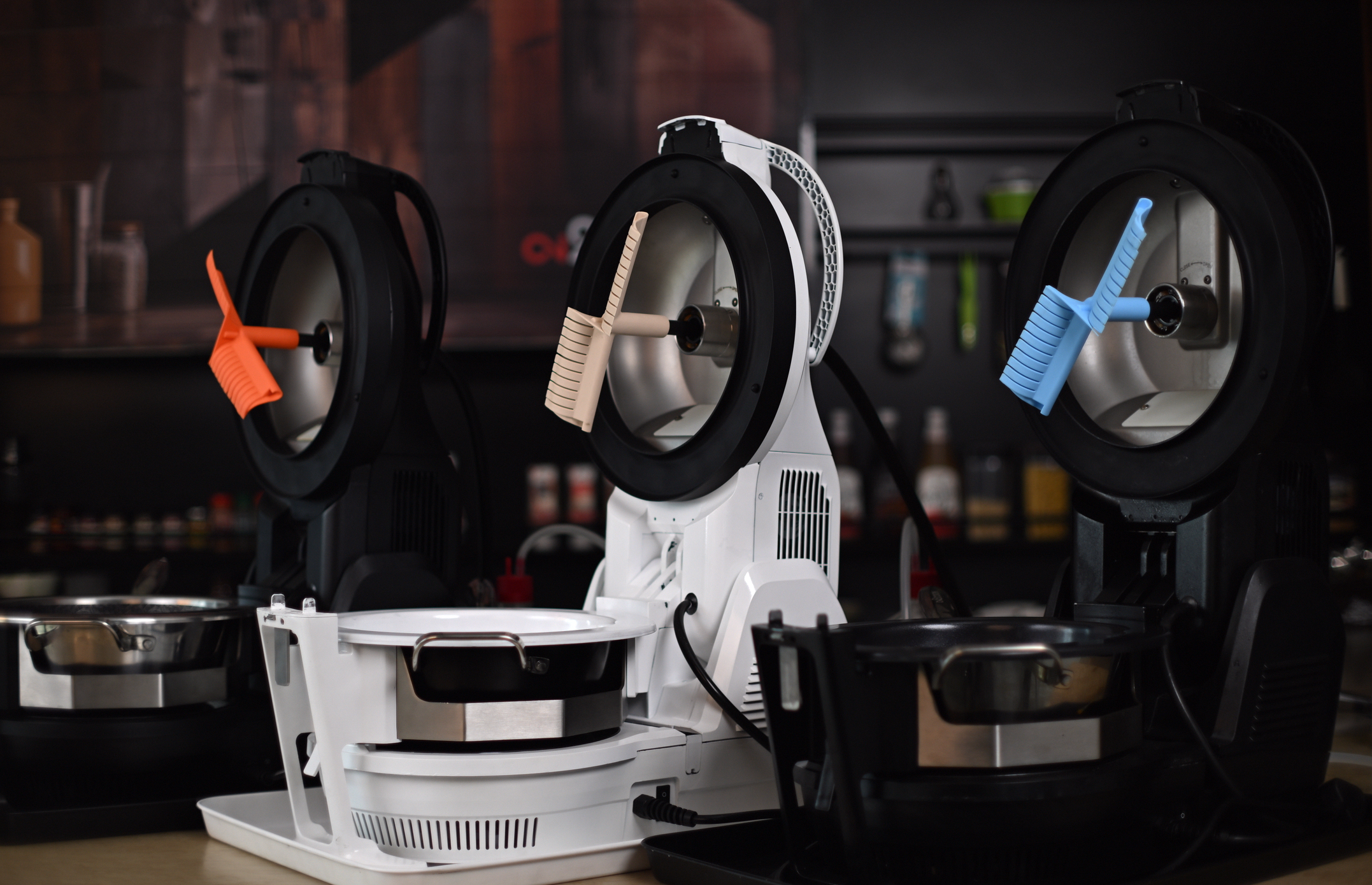
“Cook tonight's planned dal.”
For device owners, the connected-cooking roadmap links an approved recipe to On2Cook execution. You do not need a device to use the diary, recipe collection or weekly planner.